

Overview
Courses
| Term 1 | Credit Value |
| Anatomy | 2.0 |
| Anatomy Lab | 1.0 |
| Body Awareness | 0.5 |
| Clinical Skills | 1.0 |
| Massage Profession Matters | 0.5 |
| Pathology | 0.5 |
| Physiology | 1.5 |
| Techniques | 2.0 |
| Therapeutic Relationship | 1.0 |
| Term 2 | Credit Value |
| Anatomy | 1.5 |
| Clinical Assessment | 1.0 |
| Clinical Skills | 1.0 |
| Hydrotherapy | 1.0 |
| MSK | 1.5 |
| Neurology | 1.0 |
| Systems | 1.5 |
| Techniques | 1.5 |
| Specialty Clinic | 0.5 |
| Student Clinic | 1.0 |
| Term 3 | Credit Value |
| Clinical Assessment | 1.0 |
| Clinical Skills | 0.5 |
| Joint Mobilization | 1.0 |
| MSK | 2.0 |
| Pain | 0.5 |
| Pregnancy Massage | 0.5 |
| Sports Massage | 0.5 |
| Systems | 2.0 |
| Therapeutic Exercise | 1.0 |
| Specialty Clinic (Seniors) | 0.5 |
| Specialty Clinic (Hospital) | 0.5 |
| Specialty Clinic (Other) | 0.5 |
| Student Clinic | 1.0 |
| Term 4 | Credit Value |
| Advanced Techniques Elective | 0.5 |
| Business | 1.5 |
| Clinical Skills | 1.0 |
| Functional Anatomy | 0.5 |
| Hydrotherapy | 0.5 |
| MSK | 0.5 |
| Nutrition | 0.5 |
| OSCE Prep | 0.5 |
| Research Literacy | 0.5 |
| Systems | 2.0 |
| Therapeutic Exercise | 0.5 |
| Specialty Clinic (Neuro) | 0.5 |
| Specialty Clinic (Elective #1) | 0.5 |
| Specialty Clinic (Elective #2) | 0.5 |
| Specialty Clinic (Elective #3) | 0.5 |
| Student Clinic | 1.0 |
Overview
Anatomy
TERM 1: 2 credits
TERM 2: 1.5 credits
TERM 4: .5 credits
Anatomy: the study of the human body. We start by focusing on the musculoskeletal system. The Terms 1 and 2 Anatomy classes provide a foundation for preparing students for upcoming courses and clinical experiences.
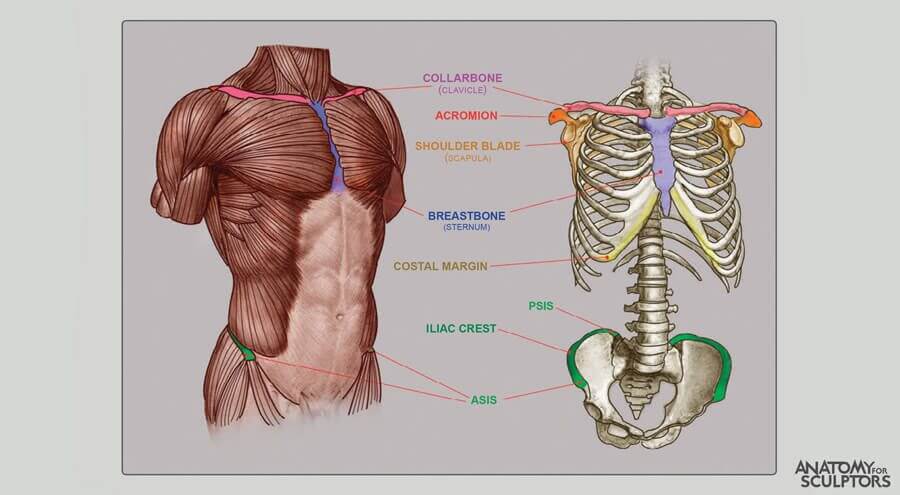
In Term 4 the course focuses on:
- Gait
- Biomechanics
- Enhancing the role of anatomy in treatment.

Anatomy Lab
TERM 1: 1 credit
This hands-on course introduces palpation theory and practice. It focuses on:
- location and;
- identification of structures.
Body Awareness
TERM 1: .5 credits
In this course, students learn and develop body awareness. The basic principles of body mechanics as a part of effective self-care strategies and safe habits for a long career are employed.
Business
TERM 4: 1.5 credits
The successful massage therapist must also be a capable business person. The Business course focuses on
- employment
- self-employment skills
- the legislative and regulatory knowledge required of practicing massage therapists.
Clinical Assessment
TERM 2: 1 credit
TERM 3: 1 credit
In the Clinical Assessment courses, students learn how to evaluate physical complaints and injuries through:
- case history taking
- postural assessment
- observation
- students learn the fundamentals of:
- orthopedic
- neurological testing protocols.
Hydrotherapy
TERM 2: 1 credit
TERM 4: .5 credits
In Hydrotherapy, students learn how to use water in its various forms
- ice
- water
- steam

and how to use those forms in clinical practice including how to modify hydrotherapy to meet the specific needs of patients.
Joint Mobilization
TERM 3: 1 credit
This practical course explores joint arthrokinematics (https://www.physio-pedia.com/index.php?title=Arthrokinematics) with a focus on improving the health and function of joints through mobilization.
Massage Profession Matters
TERM 1: .5 credits
This course gives students an overview of the professional landscape:
- provincial regulatory body
- professional association
- Legislative authority
Neurology
TERM 2: 1 credit
In this course, students learn the structure and function of the
- central nervous system
- peripheral nervous systems, and
- neuromuscular physiology.
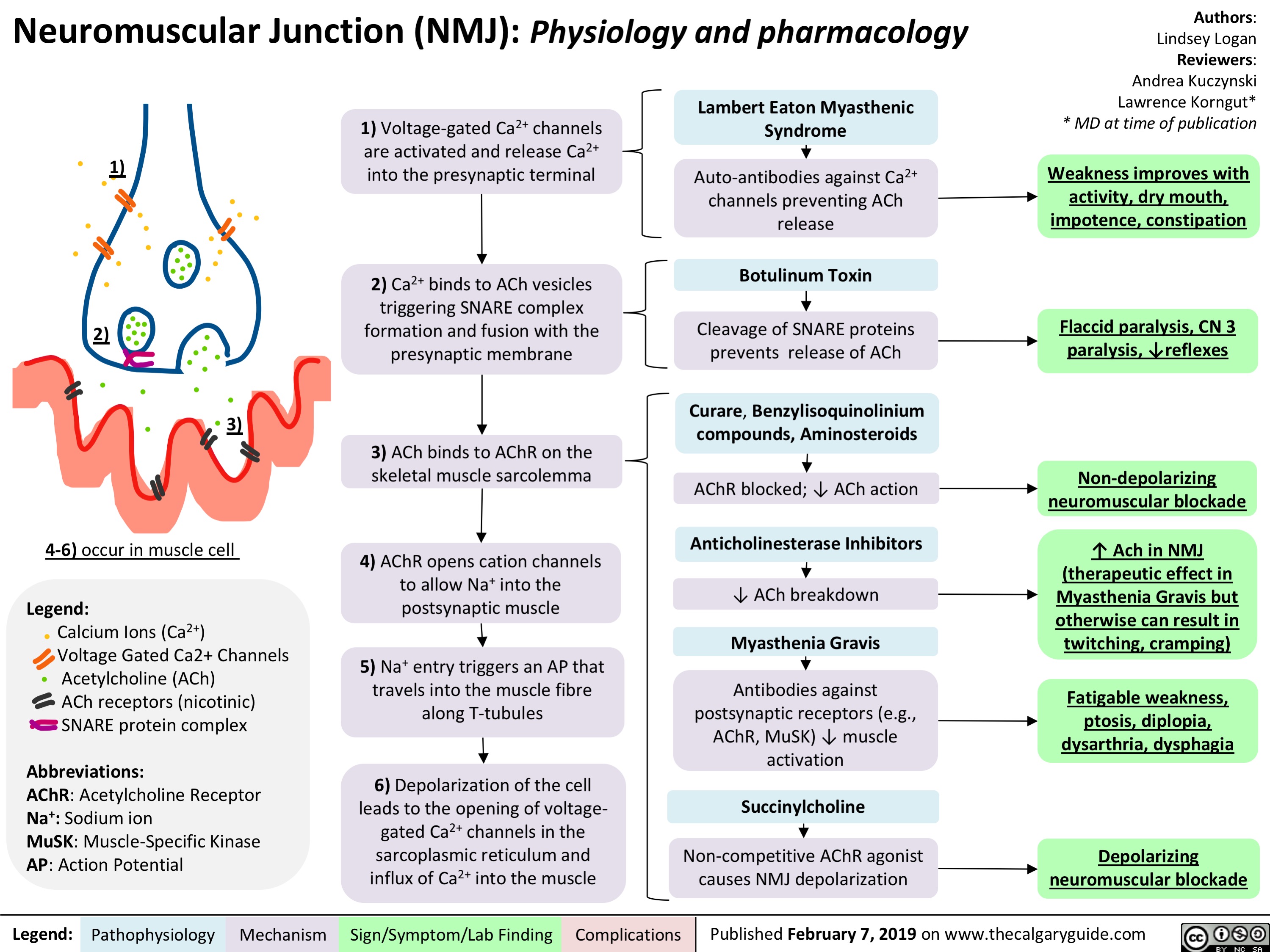
It examines the role the nervous system plays in relaxation and healing.
Nutrition
TERM 4: .5 credits
This course provides an understanding of the essentials of nutrition, leading to an appreciation of the importance of nutrition in health and healing.

OSCE Prep
TERM 4: .5 credits
This course at the end of Term 4, helps prepare the graduating students to challenge the provincial entry-to-practice certification exams successfully.
Pain
TERM 3: .5 credits
This course introduces students to pain theory based on emerging insights from neuroscience, neurobiology, neuroimmunology, and clinical pain research.
Pathology
TERM 1: .5 credits
In this course, students study general dysfunctions and disease processes. It looks at how they affect the body’s tissues and systems. It lays the foundation for future courses and clinical practice.
Physiology
TERM 1: 1.5 credits
In this course, students learn how the body functions normally at the cell, tissue, and organ level. This prepares them for subsequent courses that deal with how they are altered by injury and disease.
Pregnancy Massage
Term 3: .5 credits
Students learn appropriate treatment goals and safety factors related to each trimester of pregnancy and high-risk pregnancy. This course has both academic and clinical components.
Research Literacy
TERM 4: .5 credits
This course provides an introduction to research methodology. It provides the tools required for using research evaluation, critique, and research application in clinical practice.
Sports Massage
TERM 3: .5 credits
Through the examination of different sports and their physical needs, this course provides students with the knowledge and skills related to working with athletes.
Techniques
TERM 1: 2 credits
TERM 2: 1.5 credits
TERM 4: .5 credits (Advanced Techniques elective)
The Term 1 course introduces students to the effects, uses, selection, sequencing, and hands-on application of Swedish massage and related techniques. Emphasizing both theoretical learning and practical competence, Term 1 Techniques prepares students to begin working as clinicians. In Term 2, students continue mastering more advanced skills and complex applications. Emphasis is on efficiency, proficiency, expansion, and diversification of skills. We encourage the development of the student’s “personal style”. The Term 4 elective courses allow students to choose a specific area of technical expertise (e.g., Thai Massage), and develop skills in that area.
Theory & Practice: Musculoskeletal
TERM 2: 1.5 credits
TERM 3: 2 credits
TERM 4: .5 credits
These courses provide the knowledge and skills a massage therapist requires when assessing and treating musculoskeletal dysfunction and disorders. Including traumatic injuries, repetitive/overuse injuries, and degenerative conditions, the focus is on integrating assessment results into comprehensive treatment plans and protocols
Theory & Practice: Systems
TERM 2: 1.5 credits
TERM 3: 2 credits
TERM 4: 2 credits
These are “bringing it all together” courses. The student will integrate their knowledge and skills by incorporating pathophysiology, massage treatment principles, clinical decision-making, and manual technique considerations into treatment plans.
Therapeutic Exercise
TERM 3: 1 credit TERM 4: .5 credits
Learn the principles behind stretching, strengthening, and cardiovascular activity. You will effectively incorporate therapeutic/remedial exercise prescriptions into your work with patients. The course also focuses on biomechanical principles and exercise physiology related to health, injury, and repair.
Therapeutic Relationship
TERM 1: 1 credit
Massage Therapy is a communication-heavy profession. This course focuses on developing the verbal and non-verbal skills necessary to collaborate effectively with patients and other health care practitioners. Emphasis is placed on listening skills, therapeutic authority, ethical decision-making, professional boundary-setting, and appreciation of diversity in patient-centered care.
Clinical Education Overview
Clinical Skills
TERM 1: 1 credit TERM 2: 1 credit TERM 3: .5 credits TERM 4: 1 credit
Clinical Skills prepares students to begin Student Clinic in Term 2 by introducing them to its policies, routines, and expectations. In Term 2 and beyond, these courses support students through their clinical journey. It helps them progress with their rebooking skills, navigate difficult situations, and share experiences for whole-group learning.
Student Clinic
TERM 2: 1 credit
TERM 3: 1 credit
TERM 4: 1 credit
Student Clinic is an integral part of the learning experience at Sutherland-Chan. Beginning in Term 2, each student does one clinic shift per week, providing massage therapy to members of the general public. Student Clinic synthesizes academic and practical knowledge and skills in a “real life” clinical setting with the guidance of an experienced instructor. Student clinic encompasses developing, learning, and honing skills in communication, assessment, goal-setting, treatment planning, and hands-on competence.
Specialty Clinics
TERM 3: 2 x ½ credits (Seniors, Post-Surgical Hospital)
TERM 4: 3 x ½ credits (one Neurological, two Other as part of a picks process)
In our highly regarded specialty clinic program, students work with patients with increasingly complex health conditions and life situations. Examples include degenerative neurological disease, brain and spinal cord injuries, cancer, high-risk pregnancy, recent surgery, sports, and mental health. Specialty clinics are either at the school or off-site in different settings, including hospitals. The students focus on learning how to adapt treatment plans and establish professional rapport with more diverse types of patients than they may encounter in the Student Clinic.
